Why Underbody Protection Matters for Carp Fishing Vehicles
Carp fishing does not usually look like off-roading. You may only leave the tarmac for the final kilometre of a journey, following a farm track, crossing a field or driving down a rough access road to the lake.
But that final kilometre is often where the vehicle faces the greatest risk.
Deep ruts, exposed stones, tree roots, raised centres between wheel tracks and hidden obstacles in long grass can all contact the underside of a vehicle. The damage can range from a bent plastic cover to a cracked engine sump or damaged fuel tank.
For anglers who regularly visit remote or poorly maintained waters, underbody protection for fishing vehicles is therefore worth considering.
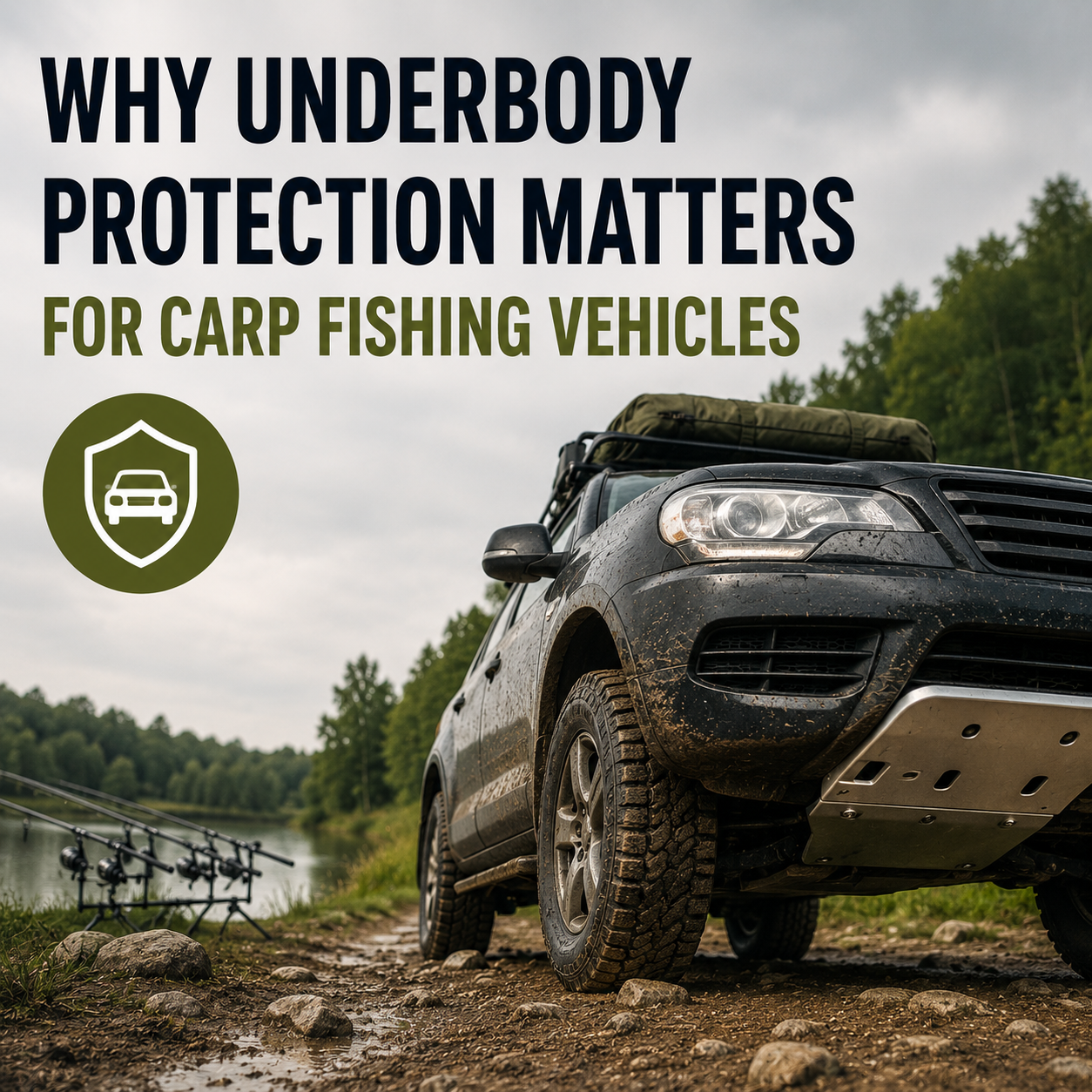
Why Fishing Access Roads Can Be Deceptive
A rough lake access road rarely looks dramatic. Most drivers are travelling slowly, and there may be no steep climbs or obvious rock crawling involved.
The problem is clearance.
A heavily loaded fishing vehicle can sit lower than usual, especially with a boot full of tackle, bait, water, a bivvy, bedchair and other equipment.
Add deep wheel ruts and a raised centre to the track, and vulnerable components can suddenly be much closer to the ground than expected.
Long grass can make matters worse because it hides stones, broken branches and other obstacles.
What Is Vulnerable Underneath a Vehicle?
The exact layout differs from one model to another, but several components can be exposed underneath SUVs, vans, pick-ups and 4x4s.
Common vulnerable areas include:
- engine sump
- gearbox
- transfer case
- differentials
- fuel tank
- AdBlue tank
- exhaust system
- other low-mounted components
Damage to these parts can be much more serious than cosmetic bodywork damage.
A cracked sump can result in rapid oil loss. Damage to a fuel or AdBlue tank can immobilise the vehicle, while an impact to a transmission component can become an expensive repair.
Plastic Covers Are Not the Same as Skid Plates
Many modern vehicles have large plastic panels underneath the engine and other areas.
These covers are useful. They can improve aerodynamics, reduce noise and help keep dirt and water away from components.
But a plastic cover should not automatically be treated as structural impact protection.
A proper skid plate is designed to create a stronger barrier between the terrain and vulnerable mechanical components.
Depending on the application, it may be manufactured from steel or aluminium and attached to strong mounting points on the vehicle.
For drivers who regularly travel on rough access roads, a properly designed underbody protection system can provide additional protection for vulnerable components beneath the vehicle.
Steel or Aluminium?
Both materials can work well, and the correct choice depends on how the vehicle is used.
Steel protection is generally chosen where high impact resistance and durability are priorities. It can be particularly suitable for vehicles that regularly encounter difficult tracks, deep ruts and rocky terrain.
Aluminium protection offers a useful combination of strength and lower weight.
For vehicles that spend most of their lives on the road but regularly use gravel tracks, forest roads and moderate off-road routes, aluminium can be an attractive option.
Thickness, design, mounting method and the area being protected are just as important as the material itself.
For a more detailed comparison of the two materials, see:
Steel vs Aluminium Skid Plates: Which Material Is Right for Your Vehicle?
Engine Protection
The engine area is one of the first places to consider because the sump can be relatively low and vulnerable on some vehicles.
A hard strike can dent or crack a sump.
In the worst case, loss of engine oil can quickly lead to serious engine damage if the vehicle continues to run.
For a fishing vehicle regularly travelling over rutted tracks, a properly designed engine skid plate can provide useful protection against direct contact with stones, roots and hard ground.
Gearbox and Transfer Case Protection
On longer vehicles, clearing an obstacle with the front wheels does not necessarily mean the centre of the vehicle will clear it.
The gearbox and, on four-wheel-drive vehicles, the transfer case may sit in an area vulnerable to contact when the vehicle passes over a raised section of track.
This is particularly relevant on deeply rutted access roads where the centre ridge can be surprisingly high.
Fuel and AdBlue Tank Protection
Fuel tanks are often large and can occupy significant space underneath the vehicle.
Some modern diesel vehicles also have a separate AdBlue tank.
The level of factory protection varies considerably between models.
Anglers who frequently travel on rough access roads should understand where these tanks are located and how exposed they are.
Damage far from a surfaced road can turn a simple fishing trip into a difficult recovery.
Protection Does Not Replace Careful Driving
Installing skid plates does not make a vehicle indestructible.
The best protection is still good judgement.
Slow down before difficult sections, understand the vehicle’s ground clearance and choose a sensible line through ruts and around large obstacles.
If you cannot see what is underneath long grass or muddy water, stop and inspect the route before driving through.
Underbody protection should be considered an additional safety margin, not permission to drive carelessly.
Think About the Extra Weight
Carp anglers already carry substantial loads, so the weight of vehicle modifications matters.
Steel protection can add more weight than aluminium.
On a vehicle already carrying tackle, bait, water and passengers, every additional kilogram contributes to the total payload.
This does not automatically make aluminium the better choice. It simply means the complete vehicle setup should be considered rather than looking at one component in isolation.
Who Actually Needs Underbody Protection?
Not every carp angler needs it.
If you fish commercial venues with surfaced car parks and well-maintained access roads, the factory vehicle setup may be completely adequate.
Underbody protection becomes more relevant when fishing regularly involves:
- farm tracks
- forestry roads
- deeply rutted approaches
- rocky ground
- remote rivers
- wild waters
- access roads that deteriorate after rain
It can also make sense for anglers travelling internationally, where unfamiliar access roads make it harder to know what conditions to expect.
Check Before Your Next Trip
Before spending money on modifications, look underneath your own vehicle.
Identify the lowest points and the components that appear exposed.
Check whether existing covers are plastic or metal and whether previous contact with the ground has already left scratches or dents.
This simple inspection can tell you much more than assuming every SUV or 4×4 has adequate factory protection.
Final Thoughts
For most carp anglers, the vehicle is simply the tool that gets tackle to the water.
But when the best waters sit beyond the end of the tarmac, that tool has to cope with conditions it may not have been designed for.
Good tyres, sensible driving and careful route selection should always come first.
For vehicles regularly travelling over rough ground, underbody protection adds another layer of security around components that can be expensive or difficult to repair.
The objective is not to turn a fishing vehicle into a competition off-roader. It is simply to reduce the chance that one hidden rock or deep rut ends the session before the rods are even out.