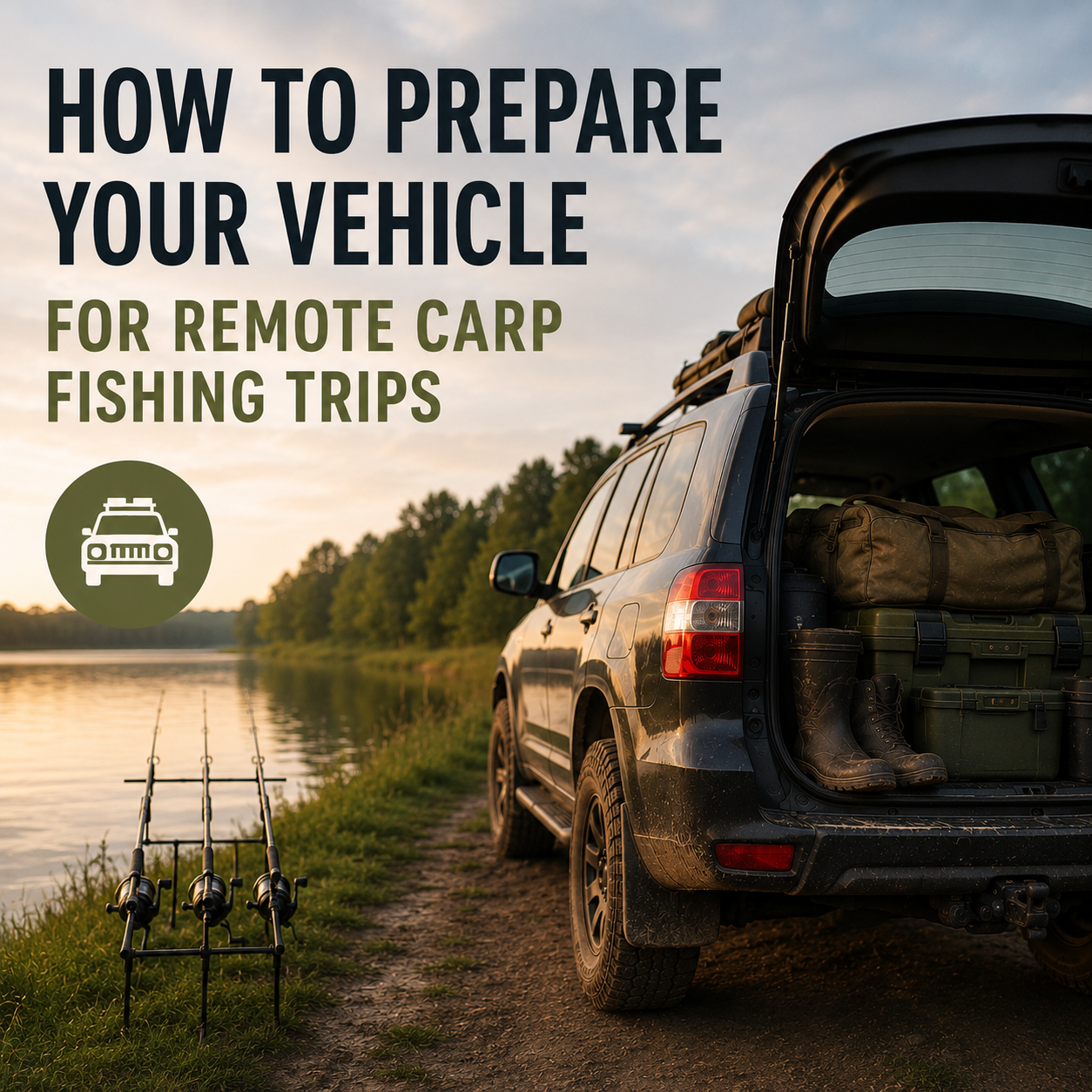
How to Prepare Your Vehicle for Remote Carp Fishing Trips
For many carp anglers, the journey to the swim is almost as important as the fishing itself. Some of the most rewarding lakes, gravel pits and wild waters are reached by narrow farm tracks, muddy access roads or rough ground that can quickly become difficult after heavy rain.
That means preparing your vehicle properly can make the difference between arriving safely at the lake and spending the first few hours of your session dealing with a puncture, getting stuck in mud or, in the worst case, damaging the underside of the vehicle.
You do not necessarily need a heavily modified off-road vehicle. But if you regularly fish remote venues, there are several practical upgrades and pieces of equipment worth considering.
Choose the Right Tyres
Tyres are one of the most important parts of any fishing vehicle.
Standard road tyres are designed primarily for tarmac, fuel efficiency and low road noise. They can work perfectly well on dry tracks, but wet grass, soft mud and loose gravel can quickly expose their limitations.
For anglers who regularly leave paved roads, all-terrain tyres can be a good compromise. They generally provide better traction on muddy access tracks, gravel roads, wet grass, loose soil, light snow and uneven ground.
At the same time, good all-terrain tyres remain suitable for everyday road driving.
It is also worth carrying a tyre pressure gauge and a portable compressor. In certain conditions, slightly reducing tyre pressure can improve traction, although pressures should always remain appropriate for the vehicle, tyre and terrain.
Protect the Underside of the Vehicle
This is one area that is often overlooked.
Access tracks around lakes can contain deep ruts, stones, exposed roots and uneven ground. Even at relatively low speeds, these obstacles can damage vulnerable components underneath the vehicle.
Depending on the vehicle, exposed areas may include:
- engine sump
- gearbox
- transfer case
- fuel tank
- AdBlue tank
- exhaust components
- differentials
Factory plastic covers are generally designed for aerodynamics, noise reduction and protection from dirt. They are not necessarily intended to withstand strong impacts from rocks or hard ground.
For anglers who regularly use rough tracks, proper underbody protection can therefore be a sensible upgrade, particularly when vulnerable mechanical components sit relatively low beneath the vehicle.
Steel and aluminium are the two most common materials used for skid plates. Steel generally offers very high impact resistance, while aluminium can provide strong protection with significantly less added weight.
There is no single material that is best for every vehicle or every type of driving.
For a more detailed technical comparison, see Steel vs Aluminium Skid Plates: Which Material Is Right for Your Vehicle?
For normal fishing trips involving gravel roads and moderate off-road use, aluminium protection may be more than sufficient. For vehicles regularly driven through deep ruts, rocky tracks or more demanding terrain, steel may be the better option.
Understand Your Ground Clearance
A 4×4 badge does not automatically mean that every obstacle can be crossed safely.
Before driving over deep ruts or uneven ground, it helps to understand where the lowest points of your vehicle are.
Pay particular attention to:
- front bumper
- engine area
- exhaust
- fuel tank
- rear differential
- side steps
- tow bar
When approaching difficult sections, slow down and choose your line carefully.
A few extra seconds spent looking at the track can save a surprisingly expensive repair.
Carry Basic Recovery Equipment
Even capable 4x4s can get stuck.
Fishing venues are particularly deceptive because grass tracks that feel firm in dry weather can become extremely slippery after several hours of rain.
A useful basic recovery kit can include:
- recovery strap
- rated soft shackles
- compact shovel
- traction boards
- work gloves
- portable air compressor
- tyre pressure gauge
- strong torch or headlamp
If you regularly fish alone, traction boards can be especially useful because they allow you to attempt a self-recovery without another vehicle.
Always make sure recovery points on the vehicle are properly rated. A transport tie-down point is not necessarily suitable for recovering a stuck vehicle.
Do Not Overload the Vehicle
Carp fishing equipment has a remarkable ability to multiply.
Bedchairs, bivvies, rods, bait, food, batteries, cooking equipment and water can add hundreds of kilograms to the vehicle.
Additional weight affects:
- braking distance
- handling
- suspension height
- ground clearance
- tyre loading
Try to keep heavy equipment low and securely positioned.
Avoid stacking large amounts of weight behind the rear axle whenever possible, as this can significantly affect vehicle balance.
For longer sessions, water is often one of the heaviest items carried. A 20-litre container weighs around 20 kg before the weight of the container itself is considered.
Think About Vehicle Organisation
A well-organised fishing vehicle saves time at the lake.
Frequently used equipment should be easy to reach without unloading everything else. It can help to separate fishing equipment, camp equipment, recovery equipment and emergency equipment.
Keeping recovery equipment accessible is particularly important. A recovery strap buried underneath a fully loaded boot is not very useful when the rear of the vehicle is already sitting in mud.
Carry a Basic Tool and Emergency Kit
Remote fishing locations can be far from workshops or roadside assistance.
You do not need to carry an entire garage, but a small kit can solve many simple problems.
Consider carrying:
- tyre repair kit
- jack suitable for the vehicle
- wheel brace
- basic sockets and spanners
- cable ties
- duct tape
- spare fuses
- jump starter
- first-aid kit
- warning triangle
- high-visibility vest
A compact lithium jump starter is particularly useful for anglers because vehicles may remain parked for several days while phones, lights or other equipment are being charged.
Be Careful With Water Crossings
A flooded track can look harmless. It may not be.
Water can hide deep holes, rocks, damaged surfaces or soft ground. If you do not know the crossing, avoid driving into it simply because another vehicle appears to have passed through.
The location of the vehicle’s air intake is particularly important. Water entering the engine through the intake can cause catastrophic engine damage.
Unless you know the depth and the condition of the ground underneath, turning around is usually cheaper than experimenting.
Check the Track Before Committing
One of the simplest habits is also one of the most effective.
If a section looks questionable, stop the vehicle and walk it first.
Check:
- rut depth
- mud consistency
- large rocks
- tree roots
- possible turning points
- escape routes
This is particularly important when towing a fishing trailer or driving a heavily loaded vehicle.
Remember that the track may also be much worse when you leave the venue. A dry access road on Friday afternoon can be very different after a weekend of rain.
Prepare for the Journey Home
Most anglers think about reaching the lake. It is equally important to think about getting back out.
Before parking for a long session, consider whether rain is forecast, whether the ground could become waterlogged, whether another vehicle could still pass, whether you can turn around and whether you are parking on soft ground.
If heavy rain is expected, parking a few metres further from the swim on firmer ground may save a great deal of trouble later.
Final Thoughts
You do not need to transform your fishing vehicle into an expedition truck.
For most carp anglers, a few sensible improvements are enough.
Good tyres, careful driving, basic recovery equipment and protection for vulnerable components underneath the vehicle can dramatically reduce the chances of a fishing trip becoming an expensive recovery exercise.
The goal is simple: reach the lake, unload the rods and start fishing.
The less time you spend worrying about whether the car will survive the access track, the more time you can spend concentrating on the carp.